


Commercial Roof Inspection: Full Checklist & What to Expect
A commercial roof is one of the most significant assets a property owner manages, and unlike a residential roof, the consequences of failure extend well beyond one family. Inventory, equipment, tenants, and business operations all sit under that single membrane. Yet routine inspections are skipped more often than not, usually until a leak forces the issue. A professional commercial roof inspection catches early signs of trouble, extends the roof’s lifespan, and prevents costly future repairs before minor issues become structural concerns. If you want to understand the full scope of what professional roofing service covers, see what a thorough commercial roofing assessment involves.
What you’ll learn in this post:
- Why regular commercial roof inspections are essential for property protection
- The complete checklist of what a professional inspection covers
- How often inspections should happen and when to schedule them
- What tools and techniques inspectors use to find hidden moisture and structural damage
- How to choose the right roofing contractor for your commercial roofing needs
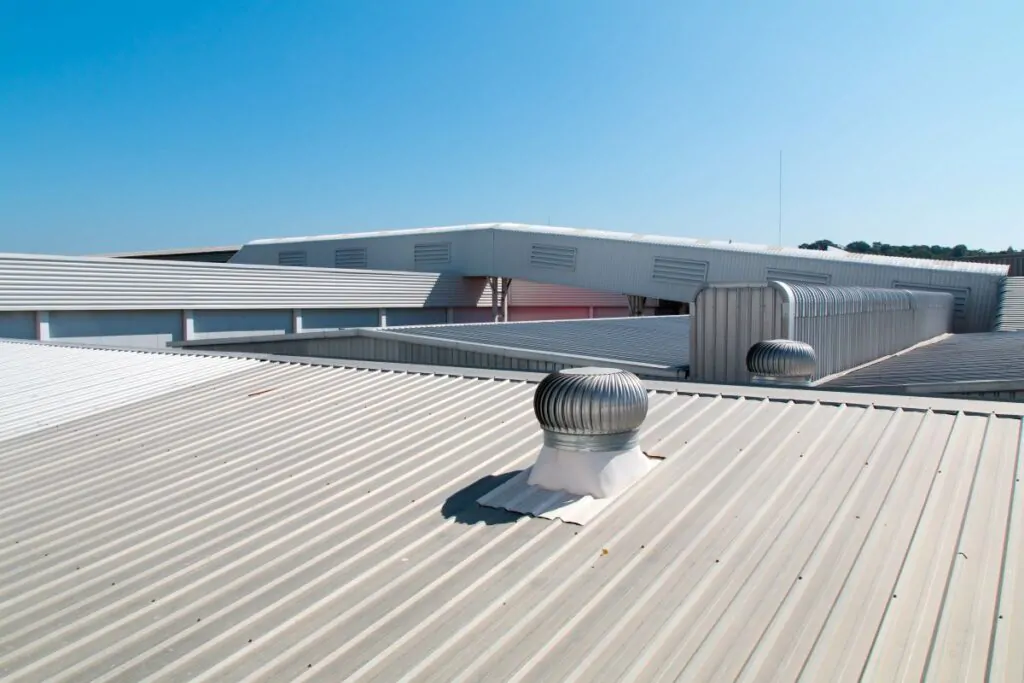
Why Commercial Roof Inspections Cannot Be Skipped
Many property owners in Peoria Heights and surrounding areas treat roof inspections as an optional expense rather than a standard part of facility maintenance. That mindset changes quickly after a significant leak disrupts tenants, voids a roofing warranty, or triggers costly emergency repairs. Routine inspections are the lowest-cost tool available for managing long-term roof performance.
- Warranty compliance: Most commercial roofing warranties require documented inspections at regular intervals to maintain warranty coverage. Missing even one scheduled inspection can void the warranty entirely, leaving building owners responsible for the full cost of any future roof repair or full roof replacement.
- Early problem detection: Membrane blisters, drainage failures, and seam failures are nearly invisible until they become active leaks. A trained inspector identifies these conditions long before water intrusion begins, allowing targeted repairs at a fraction of the eventual cost and helping to reduce emergency repairs significantly.
- Insurance claims and documentation: Many commercial property insurers require evidence of routine maintenance to support a damage claim. A documented inspection history establishes that the roof was in acceptable condition prior to severe weather events, satisfying insurance requirements and strengthening any future insurance claims.
- Extended roof lifespan: Commercial roofing systems that receive regular professional attention routinely outlast neglected systems by 10 to 15 years. The cost of two inspections per year is minimal compared to the cost of an unplanned full roof replacement triggered by preventable structural damage.
The financial case for routine inspection is straightforward. Proactive maintenance on a commercial roof consistently costs far less than reactive repair, and commercial property owners who build inspection cycles into their annual maintenance plan almost always come out ahead in the long run.
8 Areas Covered in a Commercial Roof Inspection
A thorough commercial roof inspection is not a quick visual inspection across the surface. It is a systematic examination of every component of the roofing system, from the membrane to the drainage systems to the penetrations, using both visual assessment and specialized equipment. Understanding what a professional inspects helps building owners evaluate the quality of service and verify that inspection findings are fully documented.
1. Roof Membrane Condition
The membrane is the primary waterproofing layer of most commercial roofing systems, whether it is TPO, EPDM, modified bitumen, or built-up roofing. The inspector examines the entire roof surface for blistering, punctures, seam failures, and areas of ponding water. Each membrane type has specific failure patterns, and an experienced contractor knows exactly what to check based on the roofing materials in place.
- Seams are checked for adhesion failures, lifting edges, and separation that can serve as water entry points
- Surface granule loss on modified bitumen indicates accelerated aging and reduced weather protection
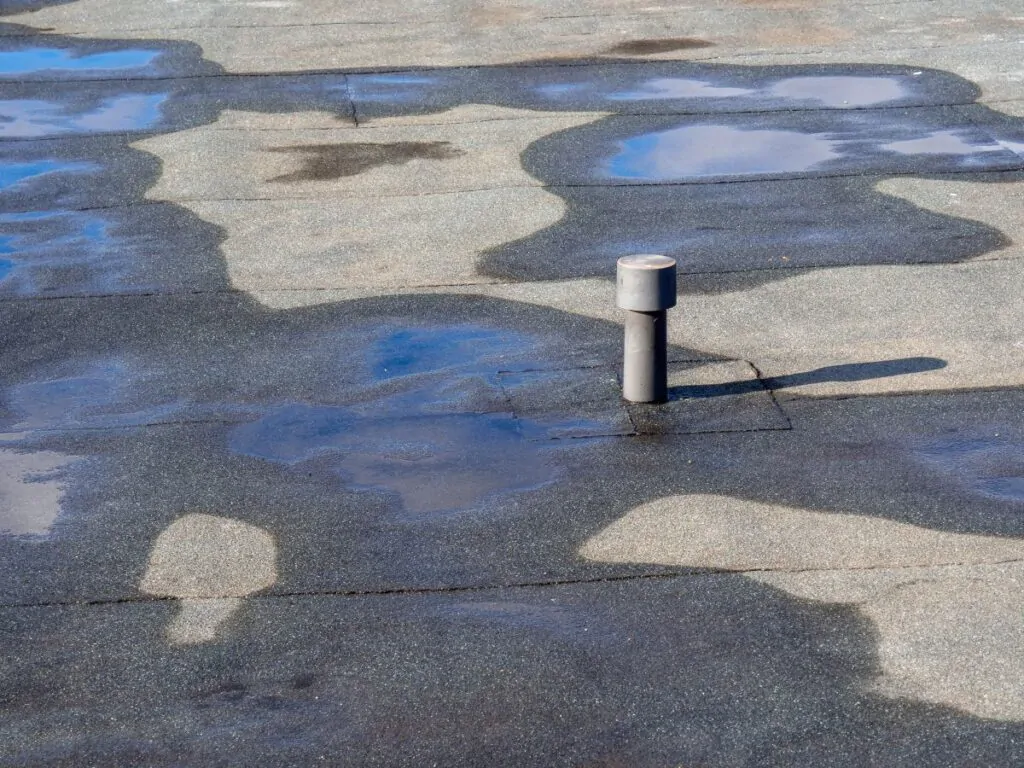
- Ponding water areas are noted and drainage solutions evaluated to prevent moisture buildup
2. Flashing Inspection
Flashing is the metal or membrane material used to seal transitions between the roof surface and vertical elements such as parapet walls, HVAC curbs, skylights, and roof edges. Flashing failures are one of the leading causes of commercial roof leaks and are a primary focus of any professional assessment. The inspector examines every flashing detail for lifting, cracking, rust, and missing sealant.
- Base flashing at walls and curbs is checked for pull-away and cracking
- Counter flashing, coping caps, and expansion joints are inspected for corrosion and fastener failures
- Edge metal and drip edge are evaluated for proper termination and attachment
3. Drainage System Evaluation
Commercial roofs are typically low-slope systems that rely on designed drainage systems to move water off the roof surface. Clogged or inadequate drainage accelerates membrane deterioration faster than almost any other factor and leads directly to moisture buildup and water stains on interior surfaces below. The inspector evaluates all roof drains, scuppers, and gutters for blockages, deterioration, and proper slope toward collection points.
- Interior drains are checked for debris accumulation and proper clamping ring seals
- Scuppers are inspected for blockage and proper flashing integration
- Low spots indicating inadequate slope are documented as inspection findings for corrective action
4. Penetrations and Rooftop Equipment Curbs
Every pipe, conduit, exhaust vent, and piece of rooftop equipment that penetrates the roof surface is a potential leak entry point. The inspector examines each penetration individually, checking the surrounding flashing, pitch pans, and pitch pocket fill condition. HVAC curbs receive particular attention since mechanical vibration can loosen flashing and create gaps over time.
- Pitch pockets are checked for cracking and adequate fill level
- Pipe boots and penetration flashings are inspected for separation and deterioration
- Rooftop equipment curb flashing is examined for movement, gaps, and sealant condition
5. Roof Deck, Substrate, and Structural Integrity
Where conditions allow, the inspector evaluates the condition of the roof deck and insulation beneath the membrane. Wet insulation reduces energy efficiency and causes ongoing moisture problems even after surface repairs are made. Soft areas underfoot indicate compromised decking or saturated insulation that represent structural concerns requiring attention.
- Soft spots or spongy areas are noted and mapped on the inspection report
- Core samples may be taken from suspect areas to assess insulation saturation
- Thermal imaging and moisture meters are used to locate hidden moisture not visible during a standard visual inspection
6. Interior Inspection for Water Infiltration Signs
A complete commercial roof inspection process includes a review of the interior space below the roof. Water stains on ceiling tiles, rust streaks on structural members, and mold growth are indicators of ongoing water intrusion that may not yet be visible from the roof surface. Interior evidence helps pinpoint existing damage and leak sources that are otherwise difficult to trace during a standard visual inspection.
- Ceiling tiles and panels are checked for staining and sagging indicating active or historical leaks
- Steel structure is inspected for rust patterns indicating long-term moisture exposure
- HVAC return air areas are noted if moisture is present
7. Roof Access Points and Safety Features
Safe access to the roof affects both safety compliance and roof performance. The inspector checks roof hatches, ladders, walkway pads, and fall protection anchor points. Without proper walkway protection, routine maintenance tasks can cause inadvertent membrane punctures that become new water entry points.
- Roof hatches are checked for weathertight seals and operational hardware
- Walkway pads are inspected for displacement and deterioration
- Fall protection anchors are evaluated for secure attachment
8. Documentation and the Detailed Roof Inspection Report
The final and most important part of any commercial roof inspection is the written report. A professional inspector provides a detailed roof inspection report with photographs, condition ratings for each system component, priority recommendations, and an estimated timeline for needed repairs. This report supports warranty claims and satisfies documentation requirements for both insurance requirements and maintenance plan compliance.
- Reports should include photographs of every area of concern
- Priority ratings help property owners sequence recommended repairs by urgency and budget
- A copy of the detailed report should be retained for warranty compliance and insurance purposes
A thorough inspection report is what separates a professional service from a basic roof walk. Property owners in Peoria Heights and surrounding areas should always request a written report and be skeptical of any contractor who cannot or will not deliver one.
How Often Should You Schedule a Commercial Roof Inspection
Frequency matters just as much as quality when it comes to the commercial roof inspection process. A single inspection every few years will not catch minor issues early enough to prevent costly repairs. Industry best practice and most warranty requirements align around the same standard schedule, and following it consistently is one of the most effective ways to protect roof performance year over year.
- Twice per year as a baseline: Most commercial roofing professionals recommend inspections in the spring and fall. Spring inspections identify damage from winter ice, snow loading, and freeze-thaw cycling. Fall inspections prepare the roof for winter by addressing vulnerabilities before cold weather locks in moisture and accelerates deterioration.
- After every significant storm: Severe weather events involving high winds, large hail, or heavy rainfall warrant a post-storm inspection. Commercial membranes can sustain impact damage that is not immediately visible and may not produce a leak for weeks or months, making prompt follow-up critical to preserving warranty coverage and insurance standing.
- Before purchasing a commercial property: Any commercial real estate transaction should include a professional assessment of the roof as part of due diligence. Existing damage, roof complexity, and roof size all affect the capital liability being taken on, and these factors should be fully understood before closing.
- When a lease is up for renewal: A roof inspection before lease renewal gives property managers documented evidence of building condition and informs decisions about maintenance responsibilities, inspection pricing, and lease terms.
Regular scheduling also builds a relationship with a trusted contractor, which matters especially for commercial properties in Peoria Heights and surrounding areas where storm seasons can produce multiple severe weather events in quick succession. Continuity with one contractor means faster response times, better understanding of your specific roof system history, and more accurate repair estimates when issues arise.
What to Look for in a Commercial Roofing Contractor
Choosing the right contractor for commercial roof inspection services is not the same as choosing someone for residential work. Commercial roofing systems are more complex, the stakes are higher, and the documentation requirements are more demanding. Building owners in Peoria Heights and surrounding areas should evaluate contractors carefully to ensure they are equipped to handle all commercial roofing needs.
Verifiable Commercial Experience
Ask specifically about the inspector’s experience with your roof type. TPO, EPDM, and modified bitumen all require different expertise and inspection techniques. A contractor who primarily does residential work is not the right choice for a comprehensive commercial roof inspection. Request references from other commercial property owners and ask about the scope of projects they have handled.
Manufacturer Certification
For roofs still under warranty, using a manufacturer-certified contractor for inspections and repairs is often required to maintain warranty compliance. Certified contractors have demonstrated knowledge of the specific commercial roofing systems they are inspecting and can perform recommended repairs in a way that preserves original workmanship warranties. Always verify certification status before scheduling an inspection on a warranted roof.
Detailed Written Reporting
A professional commercial inspector always delivers a detailed report, not a verbal summary. The report should be organized by roof component, include photographs, assign condition ratings, and provide actionable recommendations with estimated costs. A maintenance plan tailored to your specific roof type, age, and condition ensures minimal disruption to business operations while keeping the roof performing at its best.
The right contractor brings expertise, accountability, and specialized equipment to every inspection visit. That combination protects your investment and gives you the information needed to make smart, cost-effective decisions about your commercial roof over the long term.
Schedule Your Commercial Roof Inspection with ROOF TIGER
A commercial roof that goes uninspected is a liability waiting to surface. Whether you manage an office building, a retail strip, a warehouse, or any other commercial property, a professional inspection is one of the smartest investments you can make to prevent costly future repairs and protect the structural integrity of your building. ROOF TIGER brings the experience, documentation standards, and commercial roofing knowledge to give you a complete and accurate picture of your roof’s condition. Do not wait for a leak to tell you what a trained inspector could have caught months earlier. When you are ready to get ahead of the problem, contact us today to schedule your commercial roof inspection.

Ferocious Roofing

They are extremely professional and responsive, made some great suggestions along the way, and handled every little issue that came up without complaint.
Vince B

