


Gutter Cleaning In 6 Steps For Homeowners
Clogged gutters can cause thousands of dollars in water damage to your home’s foundation, siding, and landscaping. Regular gutter cleaning protects your investment and maintains your home’s structural integrity. This comprehensive guide will walk you through the essential steps to clean your gutters safely and effectively.
Proper gutter maintenance involves more than just removing leaves and debris. You’ll learn how to assess your gutter system, gather the right tools, and execute a thorough cleaning process that prevents costly repairs down the road. We’ll also cover important safety considerations and signs that indicate when professional help might be necessary.
Key Takeaways
- The DIY vs. Pro Question: Gutter cleaning presents a safety hazard at height; hiring a professional is the recommended approach for multi-story homes to eliminate risk and liability.
- The 6-Step Cleaning Process: The core method requires safely positioning the ladder, clearing large debris by hand, removing packed sediment, flushing with water, and confirming downspout flow.
- Essential Tools and Safety Equipment for Gutter Cleaning: Preparation involves securing a reliable ladder, utilizing protective gear (gloves/glasses), and collecting tools like a plastic scoop and garden hose.
- Best Practices for Year-Round Maintenance: Maintain the system twice annually (spring/fall), utilize guards to minimize filling, and prune overhanging vegetation to reduce falling material.
- Why Trust Roof Tiger: Hiring our team eliminates safety risks, guarantees a comprehensive deep clean, and ensures long-term protection for your property.
The Core Question: DIY vs. Pro (Safety & Cost)
When facing clogged gutters, the first dilemma is always whether to tackle the gutter cleaning job yourself or call a professional. This decision hinges entirely on balancing safety with cost.
- Safety First: Climbing ladders, especially on a multi-story home, is the most dangerous DIY home maintenance task. Professionals are trained and insured, mitigating the high risk of serious falls associated with gutter cleaning.
- Cost Efficiency: While a DIY gutter cleaning only costs you the price of a small scoop and your time, hiring a professional service is often more cost-efficient in the long run. The expert ensures every clog is removed, preventing future water damage to your fascia and foundation, which quickly outweighs the initial service fee.
- The Tipping Point: For gutters on the second story or higher, the safety and liability concerns heavily justify the cost of professional gutter cleaning service.
The final decision between DIY and professional gutter cleaning service must prioritize safety. Once you’ve decided to proceed with the work yourself, following a set methodology is the only way to guarantee a thorough, effective job. Knowing the risks involved, your next step is to execute the task with precision.
6 Step Gutter Cleaning Process
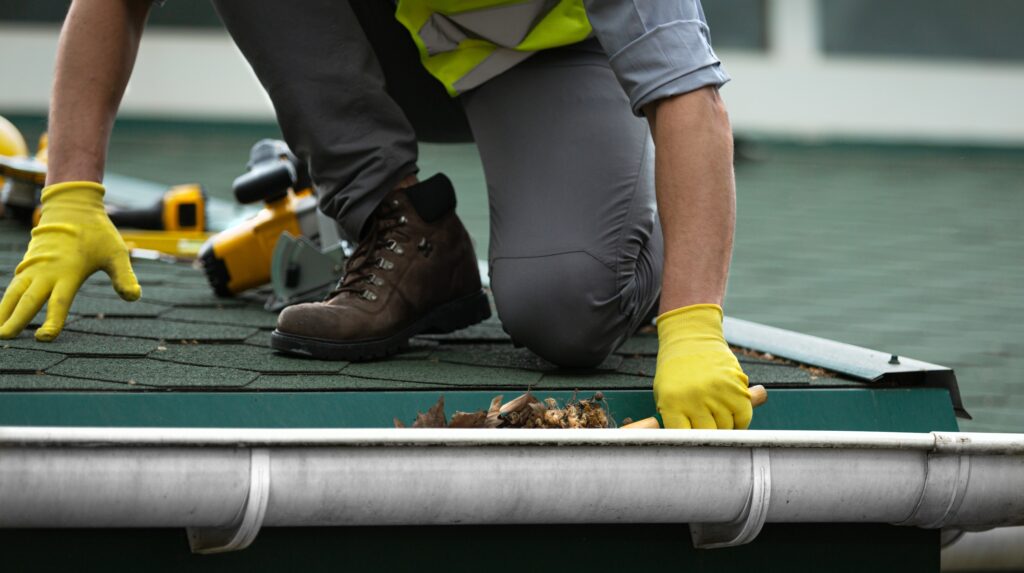
Regular gutter cleaning prevents water damage to your home and protects your foundation from costly repairs. A clear gutter system also reduces the risk of pest infestations and ensures proper drainage.
1. Position Your Ladder Safely
Set your ladder on level, solid ground away from power lines. Place it at a 75-degree angle against your home. The base should be one foot away from the wall for every four feet of ladder height. Have your spotter hold the ladder steady while you climb.
Start at a corner or downspout and work systematically around your home. During the gutter cleaning process, never skip ladder repositioning to reach farther areas, as overreaching causes most ladder accidents.
2. Remove Large Debris by Hand
Begin by pulling out leaves, twigs, and larger debris pieces with your hands. Work systematically along each gutter section, placing debris in your bucket or dropping it onto a tarp below. This initial removal makes the detailed cleaning process much easier.
Pay special attention to areas near downspouts where debris tends to accumulate. Remove any tennis balls, toys, or unusual items that may have found their way into your gutters.
3. Scoop Out Smaller Debris and Sediment
Use your plastic scoop or small trowel to remove packed debris, sediment, and smaller materials that hand removal missed. Work methodically along each section, scraping the bottom during gutter cleaning is a must to remove stuck-on materials.
This step reveals the true condition of your gutters and helps identify any damage that larger debris may have hidden. Take note of any rust spots, holes, or separation joints that need attention.
4. Flush Gutters with Water
Connect your garden hose and begin flushing each gutter section, working away from downspouts initially. This process removes remaining small particles and helps identify any clogs in the downspout system.
Watch how water flows through your gutters. Proper drainage should move water steadily toward downspouts without pooling or backing up. Slow drainage indicates remaining blockages that need additional attention.
5. Clear Downspout Blockages
Test each downspout by running water through it. If water backs up or drains slowly, you have a blockage that needs clearing. Try flushing from the top with your hose first.
For stubborn clogs, you may need to disconnect the downspout at ground level and flush upward. Sometimes a plumber’s snake can break through packed debris that water pressure cannot move.
6. Inspect and Test the Complete System
After cleaning, run water through your entire gutter system to ensure proper flow. Check that water exits freely from all downspouts and flows away from your foundation.
Look for signs of damage such as loose brackets, separated joints, or areas where gutters pull away from the house. Address these issues promptly to prevent leaks and water damage.
Essential Tools and Safety Equipment for Gutter Cleaning
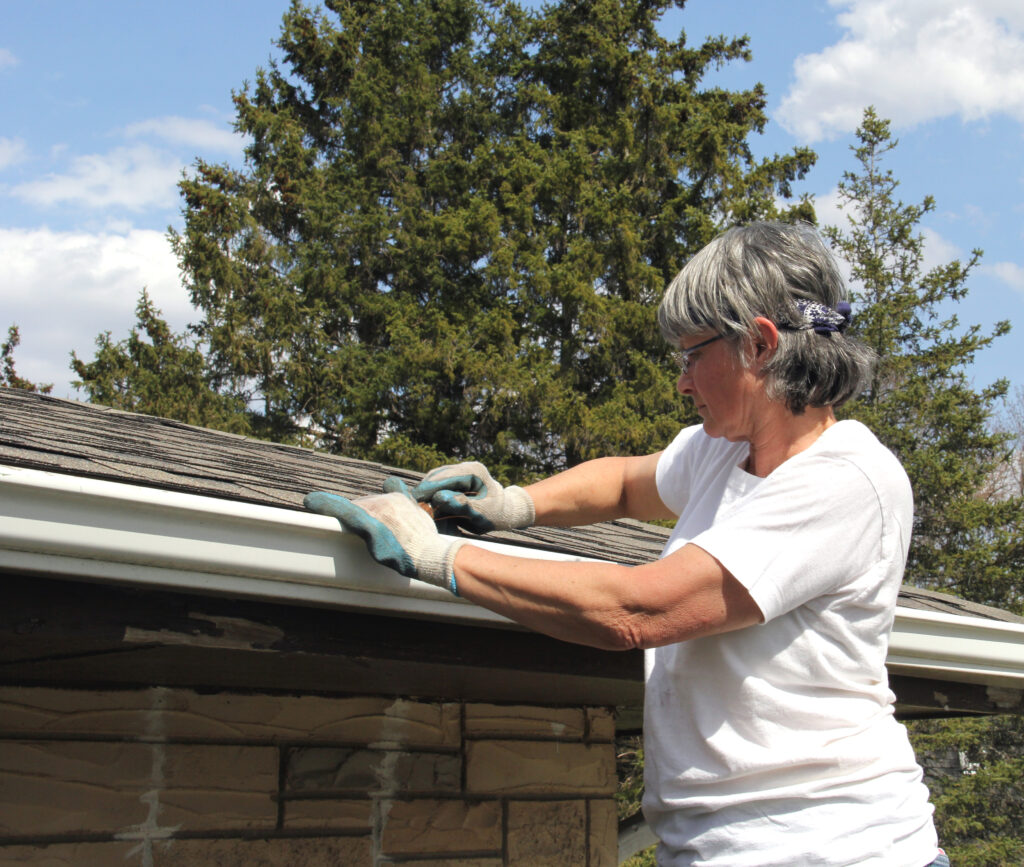
Before beginning any gutter cleaning project, assembling the right roofing tools ensures both safety and efficiency. Your toolkit should include a sturdy ladder rated for your weight plus 50 pounds, work gloves to protect against sharp edges and debris, and safety glasses to shield your eyes from falling particles.
A garden hose with a spray nozzle attachment helps flush out remaining debris and test water flow. You’ll also need a plastic scoop or small trowel for removing accumulated materials, plus a bucket or tarp to collect debris. Many homeowners find that a leaf blower can speed up the initial debris removal during the gutter cleaning process.
Warning Signs Your Gutters Need Immediate Attention
- Water overflowing during rain, sagging sections, or exterior staining signal clogged or blocked gutters.
- Plants growing in gutters or birds and pests nesting indicate long-term debris buildup.
- Foundation cracks or water pooling near your home may result from faulty gutters.
- Ice dams in winter suggest improper drainage, potentially causing roof damage.
Best Practices for Year-Round Gutter Maintenance

This effort is only half the battle; ensuring your total roof system health requires comprehensive care to mitigate algae and moss buildup that washes into your gutters. While removing debris prevents immediate clogs, sustained structural defense requires a proactive approach to the roof surface itself, which keeps damaging organic material from ever reaching the gutter in the first place. This holistic care is what guarantees long-term durability.
Use Gutter Guards for Easier Maintenance
Gutter guards can reduce debris buildup but won’t eliminate the need for periodic cleaning. Trim overhanging branches to limit leaves and twigs falling into your gutters.
Inspect Gutters After Storms
After severe storms, check for damage or excessive debris. Ice dams in winter often signal inadequate fall cleaning, so make sure gutters are clear before cold weather sets in.
Common Gutter Cleaning Mistakes to Avoid
Proper gutter cleaning is essential to prevent water damage to your home and maintain its structural integrity. As a renowned roofing company, we want to share the common mistakes that can save you time, money, and future repairs.
Avoid Cleaning Gutters in Unsafe Conditions
Never clean gutters during windy conditions or when they’re wet and slippery. These situations can lead to accidents or ineffective cleaning.
Use the Right Tools
Avoid using metal tools that can scratch or damage gutter surfaces. Choose tools that are safe and designed for the job.
Prioritize Safety
Don’t skip safety protocols to save time. Inform someone of your cleaning schedule and expected completion time to ensure safe practices.
Check Downspout Functionality
Blocked downspouts can hinder proper drainage, even with clean gutters. Always test the complete drainage system after cleaning.
Why Trust Roof Tiger for Your Gutter Cleaning Needs
At ROOF TIGER, we understand that proper gutter maintenance is essential for protecting your home from water damage and preserving its value. With our GAF Master Elite certification, locally-focused expertise, and commitment to personalized service, we are the team you can trust for all your gutter cleaning and roofing needs. Our roofing professionalism and specialized equipment, industry-leading warranties, and family values set us apart from the competition, ensuring your home gets the care it deserves.
Sustained protection, however, requires looking beyond the gutter itself; true structural defense means proactively mitigating algae and moss buildup on the roof surface, which prevents damaging organic material from washing down and causing new clogs. This holistic care is what guarantees long-term durability. Don’t let clogged gutters or poor maintenance compromise your home’s safety or curb appeal—reach out to ROOF TIGER today for a free estimate. Let us help you keep your home protected, year-round.




Ferocious Roofing

They are extremely professional and responsive, made some great suggestions along the way, and handled every little issue that came up without complaint.
Vince B

